The Options at a Glance
| Option | Time | Price (one way) | Best for |
|---|---|---|---|
| Nozomi Shinkansen Recommended | ~2h 30m | ¥14,720 (~€92) | Most travellers — fastest, comfortable, reliable |
| Hikari Shinkansen | ~3h | ¥13,870 (~€87) | JR Pass holders — covered by the pass |
| Kodama Shinkansen | ~4h | ¥13,870 (~€87) | Budget Shinkansen, stops at every station |
| Overnight bus Budget | ~8–9h | ¥2,500–5,000 (~€16–31) | Tight budget travellers, saves a night's accommodation |
| Domestic flight | ~1h flight + transfers = 4–5h total | ¥8,000–20,000 (~€50–125) | Rarely worth it — Shinkansen beats it on total time |
The Shinkansen — How It Works
The Tokaido Shinkansen connects Tokyo Station to Shin-Osaka Station, running roughly every 10 minutes during the day. There are three service types: Nozomi (fastest, fewest stops), Hikari (slightly slower, covered by JR Pass), and Kodama (stops at every station, takes almost twice as long). For most travellers, the choice is between Nozomi and Hikari.
Seats come in unreserved (libre) or reserved classes. Unreserved is slightly cheaper but means standing in a queue and potentially having no seat during peak travel periods. On a two-and-a-half-hour journey, it is worth paying the small premium — typically ¥530 — for a reserved seat. Book reserved seats through the JR ticket machines at any major station, or online via the JR website.
You can board the Tokaido Shinkansen from Tokyo Station or Shinagawa Station. Shinagawa is useful if you are staying in the south of Tokyo — the train saves 6 minutes versus Tokyo Station and the platforms are significantly less crowded.

The JR Pass — Is It Worth It for Tokyo–Osaka?
The JR Pass is an unlimited travel pass for foreign visitors. The 7-day pass costs around ¥50,000 (approximately €315). It covers the Hikari and Kodama Shinkansen on the Tokaido line but not the Nozomi — Japan's fastest and most frequent service. This is the most important thing to understand about the JR Pass: if you use it on the Tokyo–Osaka route, you will be taking Hikari trains.
Whether the pass pays off depends entirely on how much you plan to travel beyond the Tokyo–Osaka journey itself. Here is the maths for a typical one-week trip:
In the example above the pass does not quite pay off on its own — but add a day trip to Hiroshima, or a return trip to Nara, and it crosses over. The general rule: if your trip includes Tokyo, Kyoto, Osaka and at least one other JR-covered destination, the 7-day pass is likely worth it. If you are only doing the one-way Tokyo–Osaka leg, buy individual tickets.
Book Shinkansen Tickets or JR Pass
Klook lets you buy Shinkansen tickets and the JR Pass in advance, delivered digitally. Avoids queuing at Japanese station ticket machines.
JR Pass on Klook → Shinkansen Tickets →The Overnight Bus — The Budget Option
Night buses from Shinjuku Bus Terminal (Busta Shinjuku) to Osaka run overnight, departing around 22:30–23:30 and arriving at Osaka Umeda or Namba around 06:30–08:00. The cheapest tickets are basic reclining seats. Willer Express buses offer the best comfort-to-price ratio — their "relax" and "cocoon" seats are genuinely usable for a night's sleep.
Best for: travellers on a tight budget, or anyone doing a one-way trip who is happy to save a night's accommodation by sleeping on the bus.
Flying — Why You Probably Should Not
Flights between Tokyo (Haneda) and Osaka (Itami or Kansai) exist and take about an hour in the air. They sound appealing until you do the actual maths. Getting to Haneda from central Tokyo: 30–40 minutes. Arriving at the airport two hours before departure for domestic: standard practice. Flight time: 1 hour. Arriving at Itami/Kansai and getting into Osaka city centre: 30–50 minutes. Total door-to-door: 4–5 hours.
Compare that to boarding the Nozomi at Tokyo Station and stepping off at Shin-Osaka 2 hours 30 minutes later, directly in the city, with no security queue and no baggage claim. The Shinkansen wins on total journey time unless you are coming from somewhere in Tokyo with direct airport access, and even then it is marginal. Flying also tends to be more expensive once you account for baggage fees.

Should You Stop in Kyoto?
Kyoto station is on the Tokaido Shinkansen line, 15 minutes before Shin-Osaka. This means stopping in Kyoto on the way to Osaka costs you almost nothing in terms of extra travel time or money — you simply get off at Kyoto, spend a day or two, and catch the next Shinkansen to Osaka when you are ready. There is no need to buy a separate ticket for the Kyoto–Osaka leg if you have a JR Pass; if buying individual tickets, the Kyoto–Osaka section adds around ¥1,420.
For most first-time visitors to Japan, the answer is yes — stop in Kyoto. It is a genuinely different experience from Tokyo and Osaka: slower, more traditional, with a density of temples, shrines and preserved districts that neither of the bigger cities can match. Two nights in Kyoto is enough to see the highlights; three is comfortable.

What to Do in Osaka
Osaka is Tokyo's louder, hungrier, more extroverted counterpart. The food culture here is serious — Osaka has more Michelin-starred restaurants per capita than any other city in the world, and street food in Dotonbori is as good as anything you will find anywhere. The city's unofficial motto is kuidaore: eat until you drop.
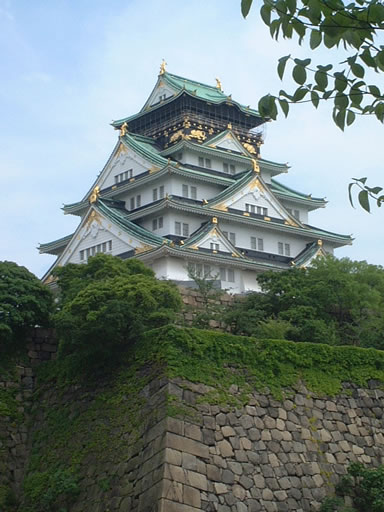
Dotonbori is the obvious starting point — the canal strip lined with neon signs, giant mechanical crabs, takoyaki stands and every kind of restaurant. Go at night when the lights reflect off the water. Osaka Castle is a 15-minute metro ride away, set in a large park that is particularly good during cherry blossom season. Shinsekai is the old downtown district that survived when the rest of the city was rebuilt — retro izakayas, blowfish restaurants, and an atmosphere that feels decades removed from the rest of modern Japan.
For shopping and nightlife, Shinsaibashi and Namba are the main commercial districts. Umeda in north Osaka is the business and upscale retail centre, with the Hep Five ferris wheel on the roof of a shopping mall as its most recognisable landmark.
Practical Booking Tips
Buying Shinkansen Tickets
Tickets can be bought at any JR ticket office or green machines (which have English interfaces) at major stations. You can also book online via the JR Central website or through Klook, which offers e-tickets that you exchange at the station. Booking a few days ahead is worthwhile in Golden Week (late April to early May) and during peak autumn and cherry blossom periods when trains fill up.
Luggage
Large suitcases (over 160cm in total dimensions) require a reservation for the designated luggage space on Nozomi and Hikari trains — book when you buy your ticket, there is no charge. Alternatively, use a luggage forwarding service (takuhaibin) to send your bags ahead to your Osaka hotel — services like Yamato Transport pick up from your Tokyo hotel and deliver to Osaka the following day for around ¥1,500–2,500 per bag.
Arriving in Osaka
Shinkansen arrives at Shin-Osaka Station, which is on the Osaka Metro Midosuji Line — a direct connection to Umeda (1 stop), Shinsaibashi and Namba. From the Shinkansen platform to Dotonbori is around 25 minutes total including the metro.
Namba puts you closest to the food and nightlife. Umeda is better for business travellers or those arriving by Shinkansen. Both are well-connected. Avoid staying in Shin-Osaka itself — it is a business hub with limited character. Use Travala for hotel bookings — they frequently have better rates than the major booking sites.