Tokyo has a reputation for being expensive. It's not entirely wrong — but it's not entirely right either. The city has an extraordinary number of genuinely free experiences: ancient shrines, forested parks, free observation decks, world-class street food markets and entire neighbourhoods built for wandering. Here are 20 of the best, with nothing to pay at the door.
Free shrines & temples
1
Meiji Jingu Shrine Always free
Tokyo's most important Shinto shrine, set inside a forest of 100,000 trees donated from across Japan after Emperor Meiji's death in 1912. Entry is free and always will be. The 10-minute walk through the forested approach (sando) is one of the most calming experiences in the city. Arrive early to avoid tour groups. Harajuku station, 2 min walk.
2
Senso-ji Temple, Asakusa Always free
Tokyo's oldest temple (645 AD) and most visited religious site. The Kaminarimon gate, Nakamise shopping street and main temple grounds are all free. The temple is open 24 hours. Go before 8am or after 7pm to experience it without tour crowds. The five-storey pagoda and surrounding back streets reward exploration long after the main gate photo is taken.
3
Yasukuni Shrine & Chidorigafuchi Free + cherry blossoms
Yasukuni Shrine near Kudanshita station is free to enter and surrounded by some of Tokyo's finest cherry trees. The adjacent Chidorigafuchi moat walk — lined with hundreds of sakura trees overhanging the water — costs nothing. The combination is one of the finest free experiences the city offers, especially in early April. Kudanshita station on the Hanzomon line.

Meiji Jingu — 100,000 trees, completely free, one of Tokyo's great walking experiences
Free parks & gardens
4
Yoyogi Park Always free
54 hectares of green space adjacent to Harajuku. On weekends, the park fills with musicians, dancers, dog walkers, picnickers and performers of every kind. Rockabilly dancers in full 1950s costume have gathered here on Sundays for decades. No entry fee, no gates, open every day. One of the best places in the city to watch Tokyo doing what Tokyo does.
5
Ueno Park Always free
Tokyo's most famous public park and the site of the city's best-known hanami (cherry blossom viewing). The park itself is free — the national museums within it charge entry (¥1,000 for the Tokyo National Museum, ¥630 for the Science Museum), but simply walking through, sitting by Shinobazu Pond and watching the crowds costs nothing. Home to a free zoo entry for children under 12.
6
Imperial Palace East Gardens Free, book-free
The former site of Edo Castle's innermost defensive ring, now a 210,000 sqm garden open to the public for free. Stone walls, moats, a traditional Japanese garden and seasonal flowers throughout the year. Open Tuesday–Sunday, closed Monday and Friday. Ote-machi or Takebashi station, 5 min walk. One of the most undervisited free sites in central Tokyo.
7
Shinjuku Chuo Park Free
The large park directly behind the Tokyo Metropolitan Government Building is free and uncrowded — a peaceful pocket in the heart of west Shinjuku. Combine with a visit to the free observatory above (see #9). Good for a mid-afternoon break away from the shopping crowds on the east side of the station.
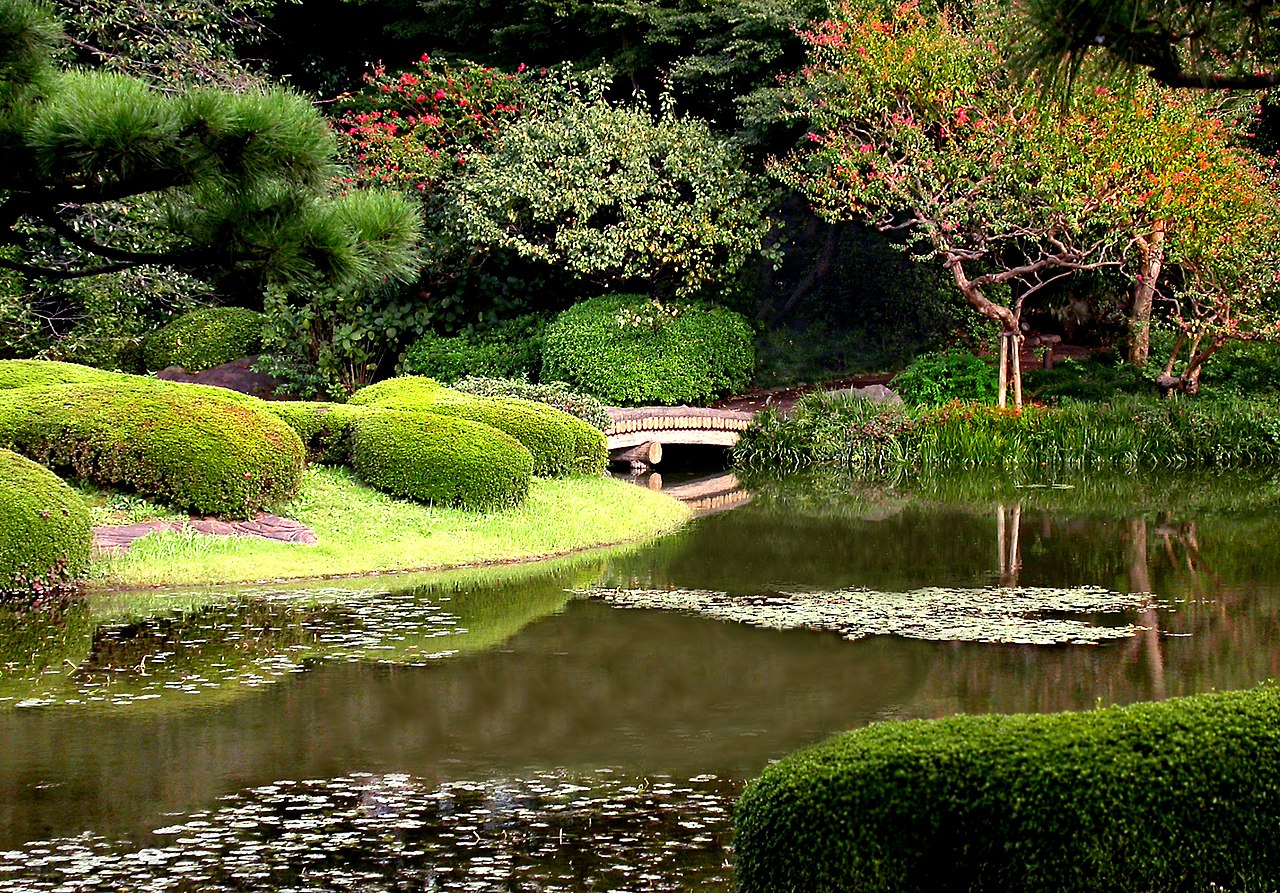
Imperial Palace East Gardens — 210,000 sqm of free public garden in central Tokyo, often overlooked by tourists
Free viewpoints & observatories
8
Tokyo Metropolitan Government Building Free, 202m
Two observation floors at 202 metres — both free, both open to the public. The North Tower opens daily (except Monday) until 10:30pm, making it Tokyo's best free evening viewpoint. On clear winter days you can see Mount Fuji to the west. Compare this to Tokyo Skytree (¥2,100–3,400) or Tokyo Tower (¥1,200) and the value is obvious. Tochomae station, direct access.
9
Bunkyo Civic Centre Observatory Free, 25th floor
Less known than the Metropolitan Government Building but equally free. The 25th floor of the Bunkyo City Hall offers 360-degree views including Skytree, Fuji on clear days and the Yamanote line loop below. Open Monday–Saturday. Korakuen or Kasuga station, 5 min walk. Almost never crowded.
10
Carrot Tower, Sangenjaya Free local viewpoint
The 26-storey community building in Sangenjaya (a lively local neighbourhood south of Shibuya) has a free observation lounge at the top. Not as dramatic as the government building, but with a different angle on the city and zero queues. Sangenjaya station on the Tokyu Den-en-toshi line, 1 min walk.

Tokyo Metropolitan Government Building — free observatory at 202m, open until 10:30pm
Free neighbourhoods to explore
11
Yanaka — old Tokyo atmosphere Free to wander
Yanaka survived the WWII firebombing that destroyed most of Tokyo, leaving a neighbourhood that feels like the city must have looked in the 1950s: narrow lanes, wooden shopfronts, a large traditional cemetery, independent sweet shops and craft workshops. Yanaka Ginza shopping street is the heart. Nippori or Yanaka station, 5 min walk. No entry fees anywhere. One of the most authentic free experiences in Tokyo.
12
Shimokitazawa — live music & vintage Free neighbourhood
Tokyo's bohemian quarter — a dense tangle of live music venues, second-hand clothes shops, independent bookshops and theatre spaces. Window shopping costs nothing, and the energy of the neighbourhood is free. Walking Shimokitazawa on a Saturday afternoon is one of the great low-cost Tokyo pleasures. Shimokitazawa station, Odakyu and Keio Inokashira lines.
13
Ura-Harajuku & Omotesando backstreets Free window shopping
Behind the main Omotesando boulevard lies a grid of quiet streets (called Ura-Harajuku or Cat Street) packed with independent boutiques, concept stores, coffee shops and streetwear. Browsing is free and the architecture alone is worth the walk — many buildings are designed by leading Japanese architects. Connect directly with Yoyogi Park and Meiji Shrine for an all-day free circuit.
14
Akihabara — browse for free Free to explore
The multi-storey electronics and anime district is completely free to walk through and explore. Yodobashi Camera and Bic Camera electronics stores have free entry — you're not obligated to buy. Retro game shops let you browse. The street-level density of neon, signage and noise is worth experiencing even if your budget for the day is ¥0.

Shimokitazawa — Tokyo's most creative neighbourhood. Free to walk, free to browse, free to enjoy.
Free experiences & activities
15
Tsukiji Outer Market — breakfast browsing No entry fee
The inner market moved to Toyosu, but the outer market's dozens of stalls — selling fresh sushi, grilled shellfish, tamagoyaki, street food and kitchen supplies — remain completely free to walk through. You'll spend money if you eat (budget ¥1,500–2,500 for a thorough breakfast), but browsing costs nothing. Best before 10am before the tourist crowds peak. Tsukijishijo station, 2 min walk.
16
Shibuya Crossing — watch from above Free viewpoint
The crossing itself costs nothing to cross. But the best free viewpoint is the second floor of the Starbucks on the northeast corner — buy one coffee (¥600) and you can watch the crossing for as long as you like. Alternatively, the Mag's Park rooftop on the Q-Front building is free during the day. At rush hour (5:30–7pm), up to 3,000 people cross simultaneously.
17
Sumo viewing at Ryogoku Kokugikan Free outside
Tokyo's main sumo arena in Ryogoku hosts three tournaments per year (January, May, September). On tournament days, the area outside fills with sumo wrestlers in yukata and wooden sandals walking to and from the arena. Watching this costs nothing. Day tickets are available from ¥2,000 if you want to go inside. Ryogoku station, JR Sobu line, 2 min walk.
18
Department store basement food halls (depachika) Free to browse
The basement floors of Tokyo's major department stores — Isetan Shinjuku, Takashimaya, Matsuzakaya Ginza — are free to enter and extraordinary to explore. Hundreds of food stalls, beautifully presented Japanese sweets, prepared foods, fresh sushi, bakeries and more. The Isetan Shinjuku basement is considered the finest in Japan. Free tasting samples appear regularly at premium counters.
19
Konbini culture — the free museum of Japanese life Free to enter
Spending 30 minutes in a 7-Eleven, Lawson or FamilyMart in Tokyo is a genuinely cultural experience. Hundreds of products you won't find anywhere else in the world, presented with obsessive attention to design. Hot food, seasonal items, stationery, cosmetics, banking, printing. No entry fee. No obligation to buy. The convenience store is Japan's most democratic public space.
20
Golden Gai, Shinjuku — free to walk through Explore at no cost
The cluster of approximately 200 tiny bars in six narrow alleys near Kabukicho is free to walk through. Each bar seats 5–8 people; cover charges start at ¥500 if you go inside. But just walking the alleys at night — taking in the tiny illuminated doorways, the sounds and the density of it all — costs nothing and takes 15 minutes. One of the great free urban experiences anywhere.
What a full free day in Tokyo actually costs
Here's a realistic budget for a day using only free attractions, with minimal spending on food and transport:
Metro (Suica, 4–6 trips)¥600–900
Breakfast — convenience store onigiri + coffee¥400–600
Lunch — ramen or set menu restaurant¥900–1,400
Snacks during the day¥300–500
Dinner — izakaya or don bowl restaurant¥1,200–2,000
Total for a full day
¥3,400–5,400
That's roughly €20–33 for a full day in one of the world's greatest cities, including three meals and all transport. The attractions themselves: free.
💡 Free museum days
Several of Tokyo's major museums offer free admission on specific days. The Tokyo National Museum (Ueno) is free on the last Friday and Saturday of each month. The National Museum of Modern Art (MOMAT, near the Imperial Palace) is free on the first Sunday of the month. Check museum websites before visiting — policies change.